I want to fit in

Evelyn Williams: Thousands of roses and lots of chocolate truffles. Godiva, and oysters in the half-shell.
Patrick Bateman: [Bateman narrating] I’m trying to listen to the new Robert Palmer tape, but Evelyn, my supposed fiancée, keeps buzzing in my ear.
Evelyn Williams: Annie Leibovitz. We’ll get Annie Leibovitz. And we’ll have to get someone to videotape. Patrick, we should do it.
Patrick Bateman: Do what?
Evelyn Williams: Get married. Have a wedding.
Patrick Bateman: No, I can’t take the time off work.
Evelyn Williams: Your father practically owns the company. You can do anything you like, silly.
Patrick Bateman: I don’t want to talk about it.
Evelyn Williams: You hate that job anyway. I don’t see why you just don’t quit.
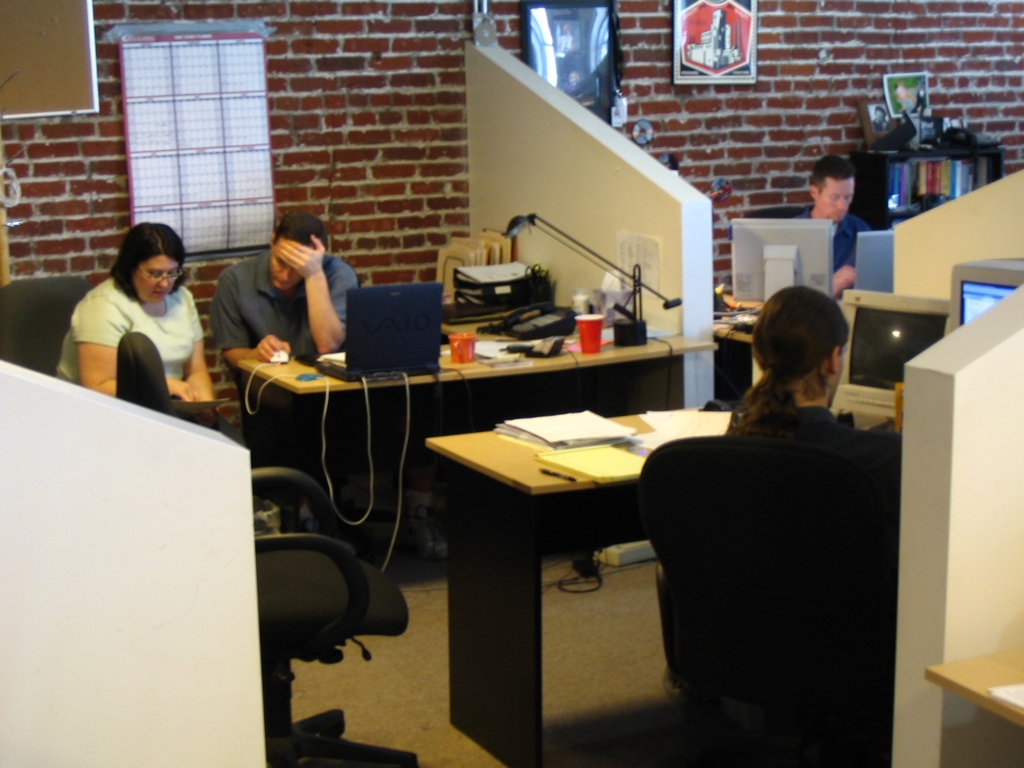
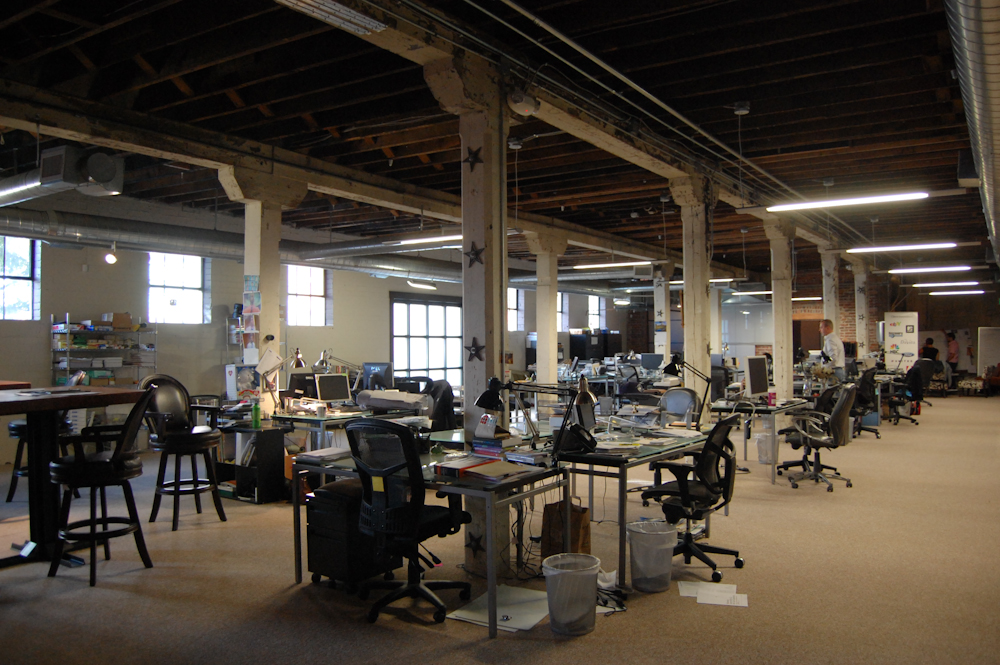
Patrick Bateman: Because I want to fit in.

A Personal Favorite

Do you like Phil Collins? I’ve been a big Genesis fan ever since the release of their 1980 album, Duke. Before that, I really didn’t understand any of their work. Too artsy, too intellectual.

It was on Duke where Phil Collins’ presence became more apparent. I think Invisible Touch was the group’s undisputed masterpiece. It’s an epic meditation on intangibility. At the same time, it deepens and enriches the meaning of the preceding three albums.

Listen to the brilliant ensemble playing of Banks, Collins and Rutherford. You can practically hear every nuance of every instrument. Sabrina, remove your dress. In terms of lyrical craftsmanship, the sheer songwriting, this album hits a new peak of professionalism.

Take the lyrics to Land of Confusion. In this song, Phil Collins addresses the problems of abusive political authority. In Too Deep is the most moving pop song of the 1980s, about monogamy and commitment. The song is extremely uplifting. Their lyrics are as positive and affirmative as anything I’ve heard in rock.

Phil Collins’ solo career seems to be more commercial and therefore more satisfying, in a narrower way. Especially songs like In the Air Tonight and Against All Odds. Sabrina, don’t just stare at it, eat it. But I also think Phil Collins works best within the confines of the group, than as a solo artist, and I stress the word artist.

This is Sussudio, a great, great song, a personal favorite.

Crocodile Loafers

I worked out heavily at the gym after leaving the office today but the tension has returned, so I do ninety abdominal crunches, a hundred and fifty push‑ups, and then I run in place for twenty minutes while listening to the new Huey Lewis CD.

I take a hot shower and afterwards use a new facial scrub by Caswell‑Massey and a body wash by Greune, then a body moisturizer by Lubriderm and a Neutrogena facial cream.

I debate between two outfits. One is a wool‑crepe suit by Bill Robinson I bought at Saks with this cotton jacquard shirt from Charivari and an Armani tie. Or a wool and cashmere sport coat with blue plaid a cotton shirt and pleated wool trousers by Alexander Julian, with a polka‑dot silk tie by Bill Blass. The Julian might be a little too warm for May but if Patricia’s wearing this outfit by Karl Lagerfeld that I think she’s going to, then maybe I will go with the Julian, because it would go well with her suit.

The shoes are crocodile loafers by A. Testoni.

What's in a name?

Yeah, such a clever title for a post. I’ll just go ahead and quote myself here: “Sometimes I’m so fucking predictable I can’t stand it.”

Which brings me rather nicely to the real point of this post, which is to expound on my thoughts of what it means to name something well. I’ve never been particularly good at naming things, especially things of which I am a part, such as bands (the main band I was in during high school had several awful names including but not limited to: footfalls, commonground, product, thirst, division and finally, fixture; all of these names were uncapitalized as such), or even websites (this lovely domain was itself alternatech.org at first).

But I am however incredibly particular when it comes to the names of things I consume. I could never have used a JooJooPad, even had it been a decent working product that anyone would buy, because the name is just so fucking ridiculous. When we started Alternate.org in March of 2000, Tai really wanted to make it a site like ArsTechnica, but I couldn’t bring myself to visit that site on a daily basis because I was reading a lot of Irvine Welsh at the time and “arse” in British-colony speak of course means “ass” and I just couldn’t visit a site that had “ars” in its pronunciation.

This spills over most importantly into music and bands. As I have made abundantly clear, Voxtrot is basically my favorite band of all time and yet when I was way into reading music blogs, I ignored posts regarding them at first because I felt the name was just so stupid (I’ve since gotten over that), and it kept me from checking out other bands too, notably SOUND Team (now defunct like Voxtrot) as well as my most recent bout of this selective blindness, a band that was at one point called (yes, really) “Say Hi to Your Mom.

Now, seriously. What a stupid fucking name. I mean just awful. If I had to guess (and I usually did when I came across this band, again and again and again referred to me by friends saying I’d enjoy their music), I essentially wrote them off entirely as a pop-punk band that probably sounded very much like Fallout Boy or 30 Seconds to Mars or something like that. Why my friends would be referring me to a band that sounded like that I had no idea, but I didn’t really think about it much. When I heard “hey, you’d probably like this band Say Hi to Your Mom” my immediate reaction was “Fuck you, you have no idea what I like, apparently.” Not because I’d heard the music of course, but because the name simply made me want to shove my or someone else’s head in a bucket and kick it repeatedly.

And so then I was recently on a trip to San Diego where I spent many nights hanging out with my old friend Scott who has this habit of turning his TV onto MTVu while people are at his house. It’s great because random music comes on that you can have a conversation over, and it gives you something to look at on the TV without having to pay too much attention, and every now and then some music comes on that you hadn’t heard but find really interesting (can you see where this is going yet?). And so of course, this music video comes on and when I’m paying attention enough to say “Hey, this is pretty good, I wonder who it is,” his quick response is “This band’s called Say Hi to Your Mom, I think you’d really like them.”

Which of course I did. A lot.

So in investigating which albums to get from iTunes, I find that they’ve even changed their name recently, so now they’re just Say Hi. Which feels like cheating to me and basically means I was right about the name. No lessons learned here.

But holy fuck should you check out their music. The name’s not so bad any more, and I can’t get enough of them lately.

The Infauxgraphic Epidemic

As has been pointed out frequently lately, there’s a strong groundswell of designers taking it upon themselves to create data visualizations that at first blush appear to be legitimate but upon further review simply reveal nothing more than the designer’s desire to impress you with their ability to create splashy graphics that include data in some way.

Graphic Design vs. Information Design

I recently spoke up on a lengthy Flickr comment thread on an image posted by another designer who is fed up with the noise being produced in the name of infographics, and it’s on this thread that I posited the term “infauxgraphics” to describe the latest spate of work that purports to display data in a meaningful way but eschews the key points of data visualization.

In this thread, a popular opinion by another commenter was expressed that it’s the mingling and conflation of graphic design and information design that’s to blame here. I took offense to this idea that graphic designers are to blame and spent much too long on writing a Flickr comment to explain that frustration. My full comment is excerpted here:

[I’d argue] that it’s a confused generation of designers who believe that graphic design is just the pursuit of beauty that’s the problem. One of art’s pursuits is beauty, but design in any form should always be primarily about solving a communication problem. If the communication method is beautiful, then all the better.

Designers who think all they need to do is make something easy to look at are designers who miss the mark in understanding that design is about making something understandable, and this translates to graphic design, user interface design and information design.

Anyone, designer or otherwise, who wades into information design without knowing the ground rules and when to break them is embarking on a failed expedition, to mix my metaphors a bit.

Graphic design has never been, and never will be about “making things beautiful.” If you believe that, then you have much to learn. The person who made the iPad graphic suffered from a misguided mindset that they can copy the look of something, and recreate its impact.

The popularity of so many useless infographics – the ones lampooned in this Flickr post – is indicative of just how many people feel design is simply the art of making something beautiful.

This is some basic, first-semester design school stuff. The key difference in my mind between graphic design and information design is simply the existence of a data-set that needs to be represented. All of the other tenets of graphic design apply equally to information design. The use of negative space, the use of visual hierarchy, the necessity of choosing the correct color combinations and not least of all, selecting which items to leave out – these are all just as important in information design as they are in graphic design. Visualizing data effectively requires a superset of design skills to be sure, and the best visualizations out there probably also included an entirely separate person acting as a statistician, but that isn’t to say that just because you’re a graphic or interaction designer, you can’t learn information design. Of course you can, you just need to pay attention to what information design really requires of you and not forget the skills you already know. Recognize that just making it pretty isn’t doing your job as a designer to dig deeper into the meaning of the data.

Fetishizing Data Visualization

One of the first problems with designers creating infographics is that a lot of us have started to fetishize data visualization on the whole. We read blogs dedicated to the subject and our pulses increase whenever we see something that contains a lot of criss-crossing lines and circles and (even better) large numbers next to small labels. There’s a visceral reaction here and it is extremely difficult to spend time critiquing something that affects us this way. But critique we must, because there’s a good chance the person who drew this wonderful-looking visualization either willfully ignored  – or was blissfully ignorant of – some really solid ground rules when they embarked on their journey of creating the graphic you’re sitting there salivating over.

Beauty is Not Skin Deep

The main dig against the latest round of infauxgraphics is that they make heavy use of  big numbers with tiny labels below them. I blame Nick Felton for the proliferation of this (well, ok, not him personally, but people copying his style). I have to admit, I love this treatment and I’ve used it in a lot of places to great effect. But when you’re putting together an all-encompassing piece, make damn sure your giant type treatments aren’t just doing the work of a simple data table while masquerading as more. This is not information design, this is typesetting.

Custom Visualization or Standard Chart?

After having worked in financial information design, I can say first-hand how attractive the idea of creating a completely custom data visualization is over using a “standard,” tried and true chart. The reality however is that standard charts come with a set of well-worn rules and best practices that can help install the constraints you need to create a truly captivating and useful infographic. Diving deeply into each of them is beyond the scope of this meager blog post, but an incomplete list includes bar charts, line charts, histograms, scatterplots (oh man, I love me some scatterplots), box plots, pie charts (ONLY for comparing parts of a whole, and generally a waste of space… we’ll talk about pie charts in a minute). I’m sure I’ve forgotten some, but you get the point.

The main idea here is to study these and their best practices, chances are you can use one right off the bat, or can modify one to meet your needs fairly easily. Unless you have data that requires a completely new way of thinking about things (or you’re Ben Fry or Golan Levin), you’re gonna be able to find a visualization that’s reaaally close to fitting your data set.

Look at the silly pie chart to the right. This made the rounds a few days ago, primarily because it’s the first set of iPad and iPad app data to become available, and it was visualized in a way that on the surface didn’t look half bad. But the designer took extreme liberty with this pie chart, because you are intended to view the entire circle as the median iPad app purchase price ($4.99) and compare the median iPhone app purchase price ($1.99) to the whole circle. Comparing the size of two values is a bar chart’s job, not a pie chart’s, and these two values in no way, shape or form add up to a whole or 100% of something.

Seriously, stay the fuck away from pie charts. And for the love of god, if you have to use one, use only one. I’m guilty of this very transgression and I’m in the process of switching all my pie charts to something else because pie charts are really, really, really useless, almost all of the time. The main things people like about pie charts are:

  1. They are circles, and everyone loves a circle. Circular things look like important things. This is not enough of a reason to use one.
  2. They can contain artfully segmented pieces inside of them, and designers like to break things up into segments. This is a valuable skill, but it’s being misused when it’s a pie chart.
  3. We like to shove too many things into a pie chart. If you have more than about 5 slices, use something else. If the things in the pie chart are not part of a whole that equal 100%, do not use a pie chart.
  4. We like the look of a lot of pie charts on one page together, but one pie chart is completely incomparable to another one. Humans just can’t perceive the differences between circles, whether they’re sized differently or include differently segmented pies, we simply can’t detect the differences between similar items very well. Bars work so much better.

So, yeah.

I’m not really sure how to conclude this other than to recap that just because you’re a graphic or interaction designer doesn’t mean you can’t also be an information designer, it’s just that you shouldn’t fetishize the data visualization. Learn the ropes first, because the good things about good visualization can’t be copied at a superficial level just because you think they look neat, there needs to be a purpose behind every decision you make, just like when you’re doing your other design work. Don’t throw out your graphic design expertise either though, as it’s important to create something people want to actually look at. Just make sure you’re not making something with the primary goal of making people impressed with your skills. Those things fail when put under the microscope of having to understand what the data is trying to say.

Socialism is Destroying America

By Jaxon Repp, reposted with permission:

This morning I was awoken by my alarm clock powered by electricity generated by the public power monopoly regulated by the US Department of Energy. I then took a shower in the clean water provided by the municipal water utility. After that, I turned on the TV to one of the FCC regulated channels to see what the National Weather Service of the National Oceanographic and Atmospheric Administration determined the weather was going to be like using satellites designed, built, and launched by the National Aeronautics and Space Administration. I watched this while eating my breakfast of US Department of Agriculture inspected food and taking the drugs which have been determined as safe by the Food and Drug Administration.

At the appropriate time as regulated by the US Congress and kept accurate by the National Institute of Standards and Technology and the US Naval Observatory, I get into my National Highway Traffic Safety Administration approved automobile and set out to work on the roads build by the local, state, and federal departments of transportation, possibly stopping to purchase additional fuel of a quality level determined by the Environmental Protection Agency, using legal tender issued by the Federal Reserve Bank. On the way out the door I deposit any mail I have to be sent out via the US Postal Service and drop the kids off at the public school.

After spending another day not being maimed or killed at work thanks to the workplace regulations imposed by the Department of Labor and the Occupational Safety and Health Administration, enjoying another two meals which again do not kill me because of the USDA, I drive my NHTSA car back home on the DOT roads, to my house which has not burned down in my absence because of the state and local building codes and fire marshall’s inspection, and which has not been plundered of all it’s valuables thanks to the local police department.

I then log on to the internet which was developed by the Defense Advanced Research Projects Administration and post on freerepublic.com and Fox News forums about how SOCIALISM in medicine is BAD because the government can’t do anything right.